
The Cumbrian Links of the Dukes of Devonshire
The original blog was written by me and published on 18th May 2026 on the British Guild of Tourist Guides Website. This is an adapted version focusing on the Cumbrian elements. For tours related to this blog please make contact
When most visitors hear the name Dukes of Devonshire, they think of ‘the grand pile’ of Chatsworth House in Derbyshire. Yet one of the most dynamic and at times dramatic chapters in the Cavendish (their family name) story unfolded far to the north in Cumbria on the Southern fringes of the Lake District, where land, industry and landscape combined to shape modern Britain.
Cumbria reveals a different dimension of the Devonshire dynasty. Here the story is not centred on court politics or London society, or grand houses like Chatsworth, but on railways, iron, slate, coastal towns and even events that reverberated across the British Empire.
Holker Hall: A Northern Seat
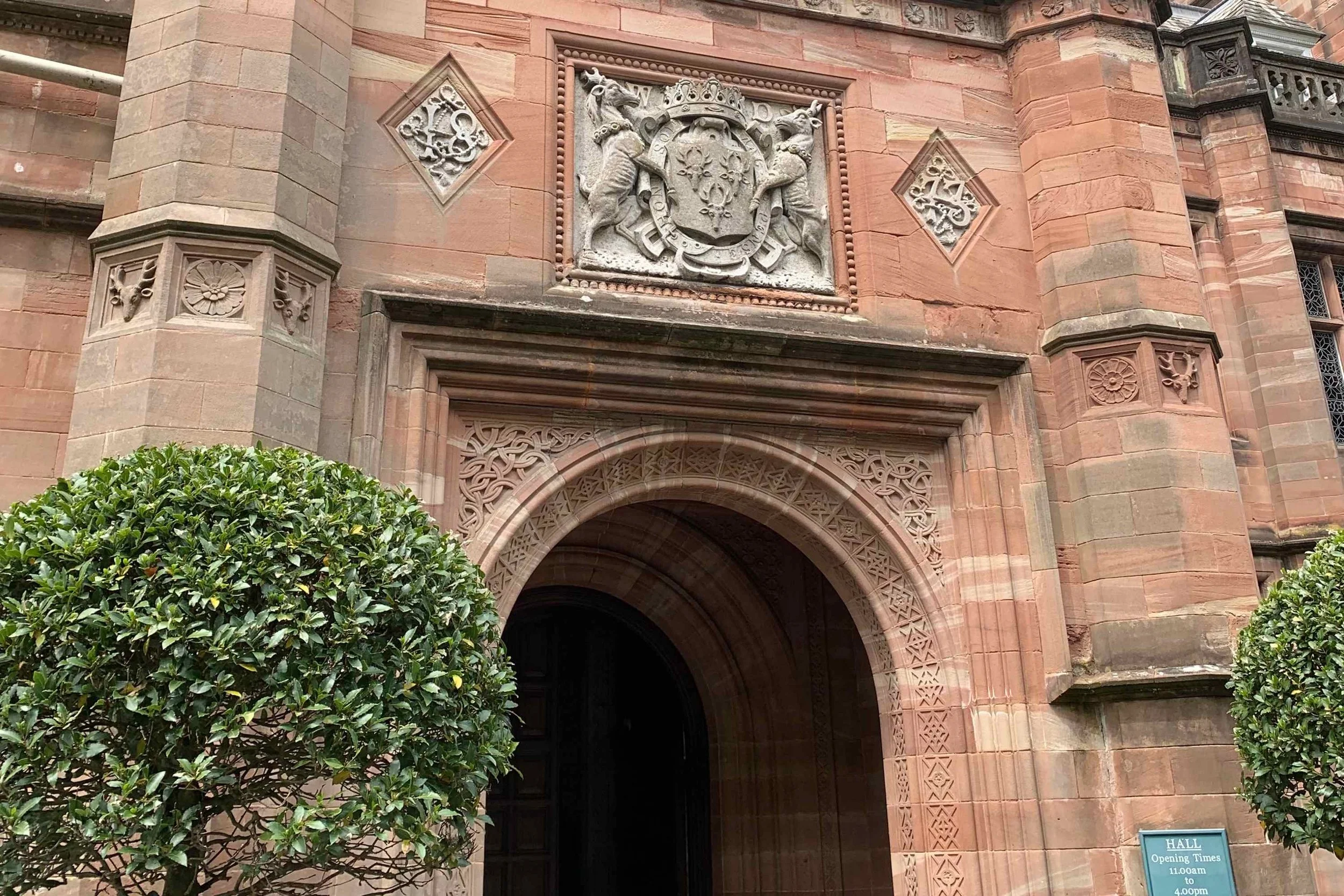
Holker Hall entrance with the Devonshire coat-of arms above the door
Holker Hall stands at the southern edge of the Lake District near Cartmel. Since 1909 it has been associated with a junior branch of the Cavendish family, but before that, it was the favoured home of the 7th and 9th Dukes of Devonshire. Holker was more homely and welcoming when compared to the grandeur of Chatsworth.
Holker Hall originally built in the early 1600s by the Preston family, it passed to a branch of the Lowther Family before passing in 1756 to a favoured nephew the younger brother of the 4th Duke of Devonshire, Lord George Augustus Cavendish. Holker became the favoured residence of his grandson William Cavendish, later Earl of Burlington, who on the death of his uncle the 6th Duke of Devonshire inherited the Devonshire title and became the 7th Duke. He was an academic who during his time at the University of Cambridge was 2nd Wrangler. His 4 children were raised at Holker and he modernised the existing house in 1842, before a large fire in 1871 completely destroyed the west wing. This was rebuilt in neo-Elizabethan style designed by the noted and prolific firm of Lancaster Architects, Paley and Austin. This wing is what visitors see today when visiting, It’s elegant and stylish rooms include the library which contains over 3000 books bought from Chatsworth. Holker illustrates Victorian reinvention. Its superbly stylish interior, gardens, parkland and agricultural estate demonstrate how aristocratic landownership evolved combining heritage, farming, forestry and modern tourism.
Holker also connects directly to the industrial story of Furness. The 6th Duke had spent lavishly on developing Chatsworth House and the Devonshire family coffers were empty. The 7th Duke took a decision to begin to develop commercial interests and this had a big effect which resonates today in South Cumbria.
Barrow-in-Furness: Industrial Transformation
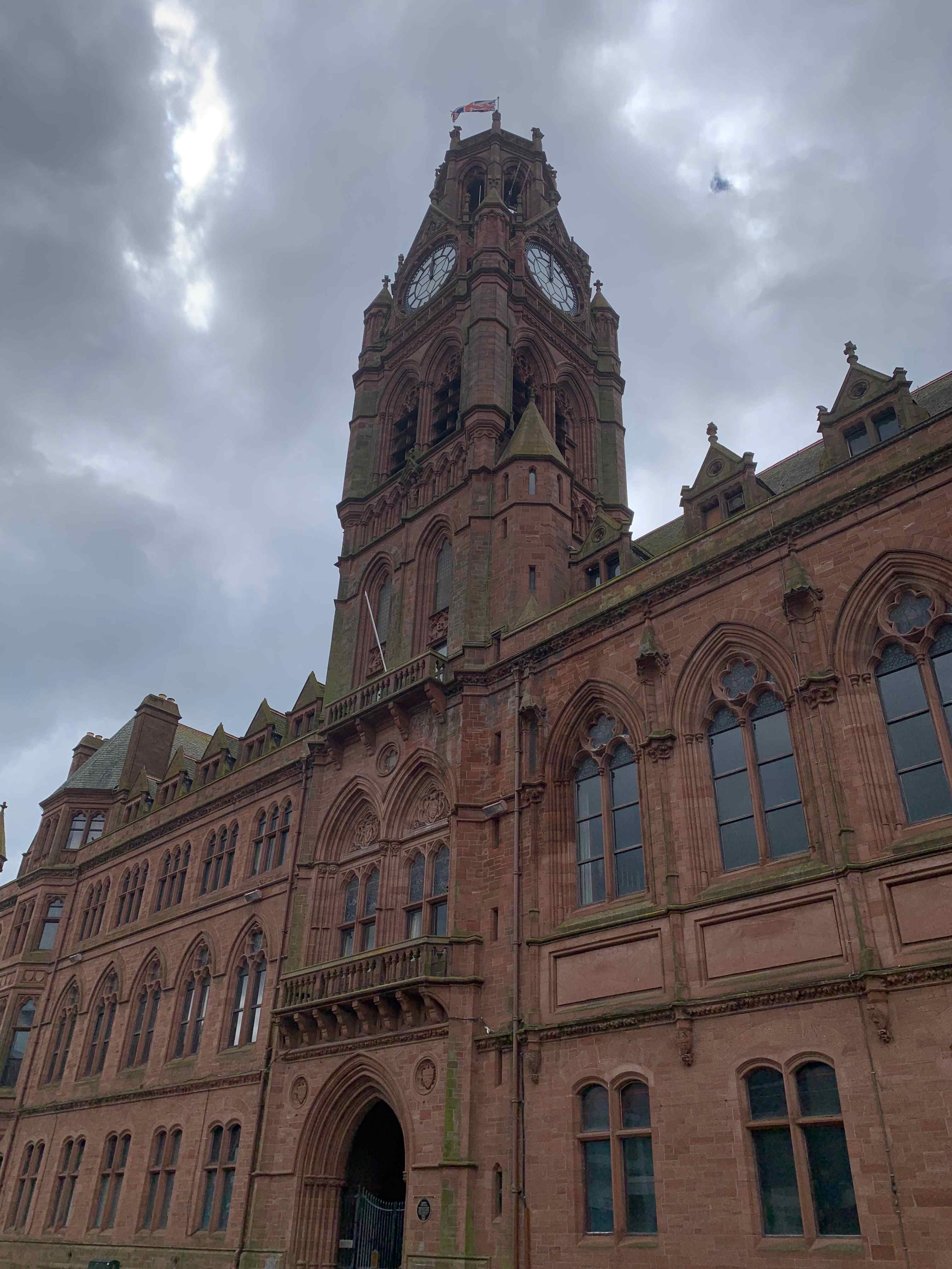
Barrow-in-Furness town hall
A statement of what Barrow was intended to be
Barrow-in-Furness was once a small coastal settlement. During the nineteenth century, under the influence of the 7th Duke of Devonshire, his associates and estate interests, it was transformed into a major industrial town with aspirations to rival Liverpool.
Iron ore mining, steel production, docks and shipbuilding drove rapid expansion. Barrow became one of the fastest-growing towns in Britain. From a population of 400 in the 1840s by 1900 it had grown to 78,000. Its docks and furnaces serving both domestic industry and imperial markets, having in 1880 the largest steel works in the world. With all that steel being produced a decision was taken to commence shipbuilding. The shipbuilding legacy continues today with the UK’s Nuclear Submarine fleet being built by BAE systems. It employs nearly 20,000 workers. with the massive Devonshire Dock Hall dominating the Barrow skyline. It also has a superb Victorian Town Hall to rival that of Liverpool and Manchester. The town is located just a short distance from the stunning coastal scenery of the Irish Sea. Barrow also boats the romantic ruins of Furness Abbey built in 1127 and other historic sites such as the dramatic Piel Island, the landing place of a noted rebellion against King Henry VII in 1487. Barrow’s location also gives it superb access to the Western part of Cumbria and the Lake District, with exceptional coastline and quieter valleys.
The Furness Railway: Linking Coast and Country
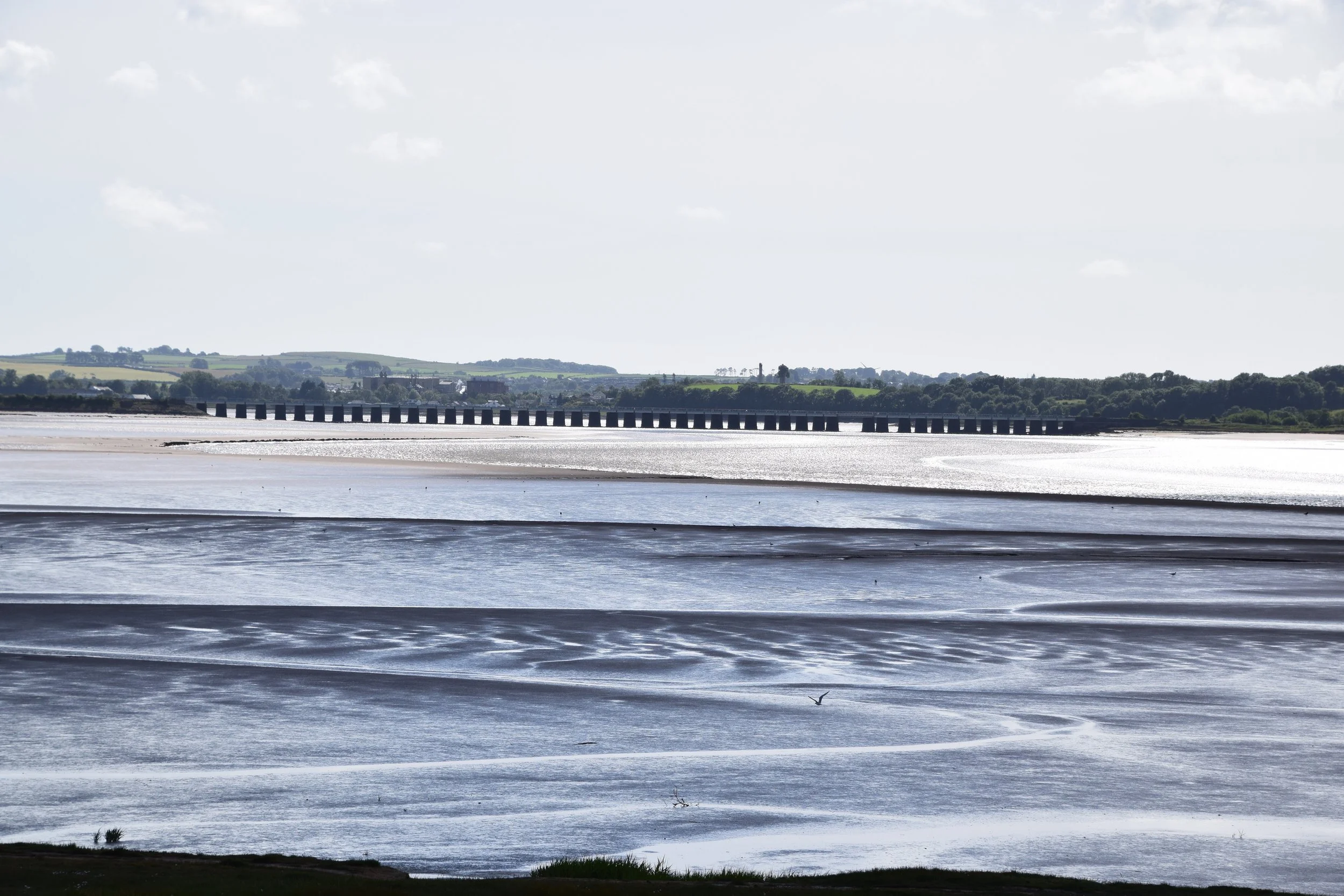
Arnside Viaduct
One of the most impressive crossings on the National rail network
The Furness Railway was central to Barrow and South Cumbria’s transformation. Built originally to carry iron ore and coal, then tourists and travellers, it still today connects Barrow to Lancaster and the wider national rail network.
The railway did more than move minerals. It brought visitors, opened access to coastal and Lakeland scenery, and integrated Cumbria into national economic systems. Today, the Lancaster to Barrow line remains one of England’s most scenic routes, a Victorian legacy still in use crossing two spectacular estuaries of Morecambe Bay.
Burlington Slate: Stone from the Fells
The Cavendish estates in Cumbria also include ownership of Burlington Stone, whose green slate has roofed buildings across Britain and beyond.
Quarrying tied the high fells into global trade networks. Here again, landownership intersected with practical enterprise: mountains became economic assets as well as landscapes of beauty.
Tragedy and Empire: Lord Frederick Cavendish
Cumbria’s connection to the Cavendish story also extends beyond industry into high political drama.
Lord Frederick Cavendish, younger son of the 7th Duke of Devonshire, born at Holker and closely connected to the Devonshire Cumbrian estates, he married the Hon. Lucy Lyttleton niece of the UK Prime Minister at the time William Gladstone. Unlike many marriages of the Victorian age it was a true love match as revealed in her personal diaries. Lord Frederick was a close confidante of Prime Minister Gladstone and was appointed Chief Secretary for Ireland in 1882. On his very first day in office, he was assassinated in Dublin’s Phoenix Park by Irish nationalist extremists in what became known as the Phoenix Park Murders.
His death shocked Britain and Ireland alike. It highlighted the intense political tensions surrounding Irish governance and reform during the late nineteenth century. For the Cavendish family, it was a personal tragedy with national repercussions. His widow Lady Lucy forgave his assassins and went on to invest her time on women’s education and Lucy Cavendish College in Cambridge is named in her honour. Lord Frederick’s impressive Pre-Raphelite inspired memorial can be found in Cartmel Priory and his statue in Barrow-in-Furness.
Stewardship and Landscape and Horse Racing
Beyond industry and politics, the Devonshire presence in Cumbria reflects long-term estate stewardship. Agricultural tenancies, woodland management and rural employment which were all shaped by estate policy and can be seen in the lands and buildings surrounding Holker Hall.
From Holker’s Hall’s impressive interior and award-winning gardens overseen by Matthew Murgatroyd, former gardener at Highgrove, King Charles’ private estate to Barrow’s docks and impressive Devonshire Dock Hall, the Devonshire / Cavendish imprint remains visible across the county. If you fancy a flutter and are here at the right time, then you may wish to attend the iconic Cartmel races which takes place in one of the most scenic locations in all of the UK.